Blog
24V vs 36V Ride-On Car: Which Power Is Right for Your Kid?
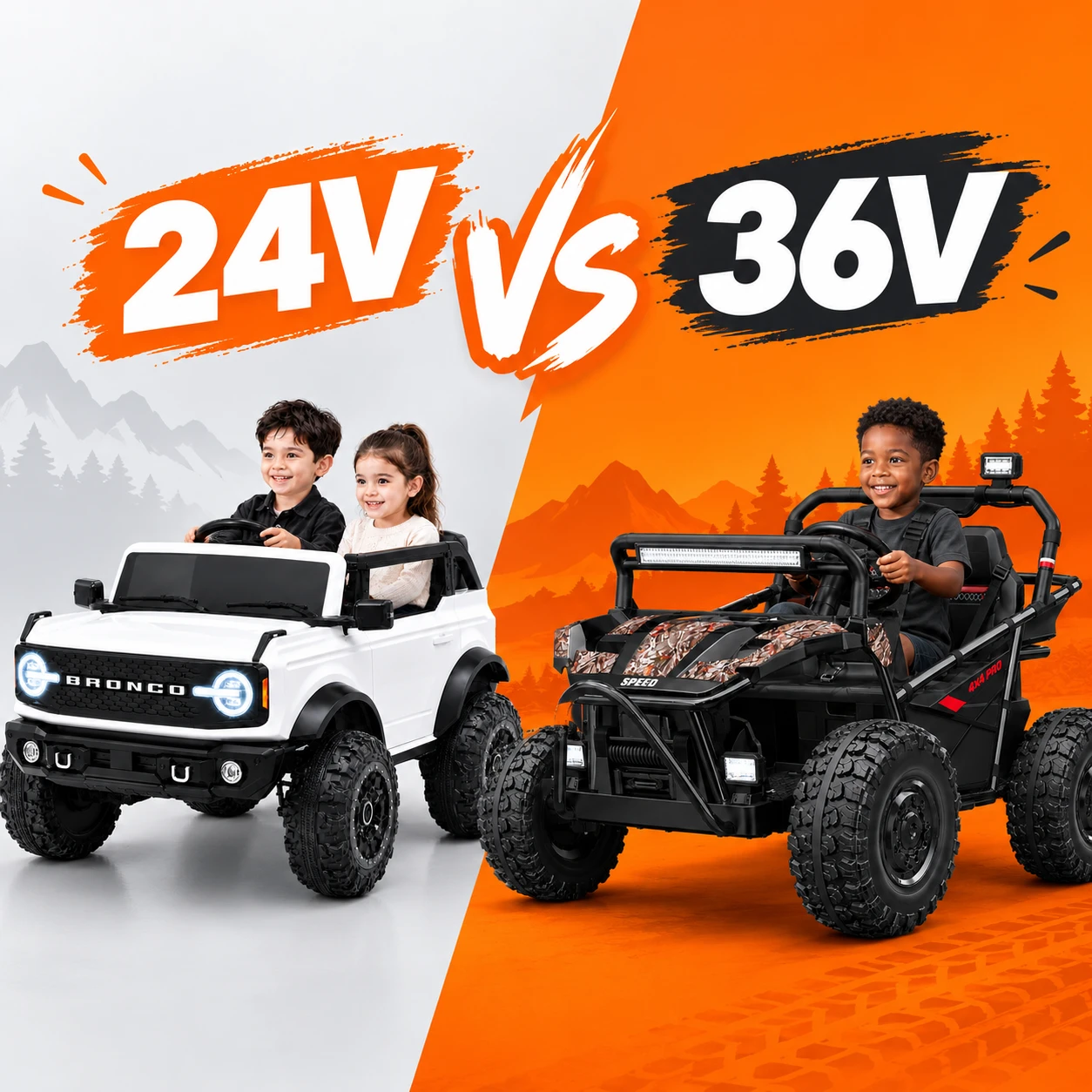
Choosing between a 24V ride-on car and a 36V ride-on car is not simply about choosing the higher number.
The real difference is how the vehicle performs when the ride gets more demanding—such as carrying an older or heavier child, carrying two children at once, driving across grass or gravel, or climbing mild slopes. In general, a 24V model is a great choice for children around ages 3–8 and everyday play on relatively flat outdoor surfaces. A 36V model is a stronger upgrade for children ages 6 and up, especially for taller or heavier kids, siblings who ride together, and families with larger yards or more challenging terrain.
Always check the specific product’s recommended age range and maximum weight capacity before purchasing, since these can vary by model.
. A 36V model is the step up for families who need more pulling power, more consistent performance, and a more capable off-road experience.
In simple terms:
- Choose 24V for everyday riding on relatively flat surfaces.
- Choose 36V when your child is bigger, your terrain is tougher, or you want a true two-seat off-road ride-on.
The Main Difference: 36V Gives You More Power Under Load
Voltage is one part of an electric ride-on’s power system. A higher-voltage system gives the motor more electrical headroom, which helps the vehicle maintain performance when there is more resistance.
That resistance can come from:
- 8+ years child
- Thick grass
- Gravel paths
- Uneven ground
- Mild hills
- Larger tires
- Longer outdoor play sessions
A 24V kids ride-on car can be plenty of fun on pavement, sidewalks, packed dirt, and short grass. But when the ride-on has to work harder, it may slow down more noticeably.
A 36 volt powered kids car is designed to deliver stronger, more consistent power in those situations. It is less likely to feel weak when driving through grass, starting on a slope, or carrying a larger rider.
The easiest way to think about it is this:
A 24V system is built for everyday play. A 36V system is built for bigger kids, bigger loads, and tougher terrain.
What Does 36V Upgrade From 24V?
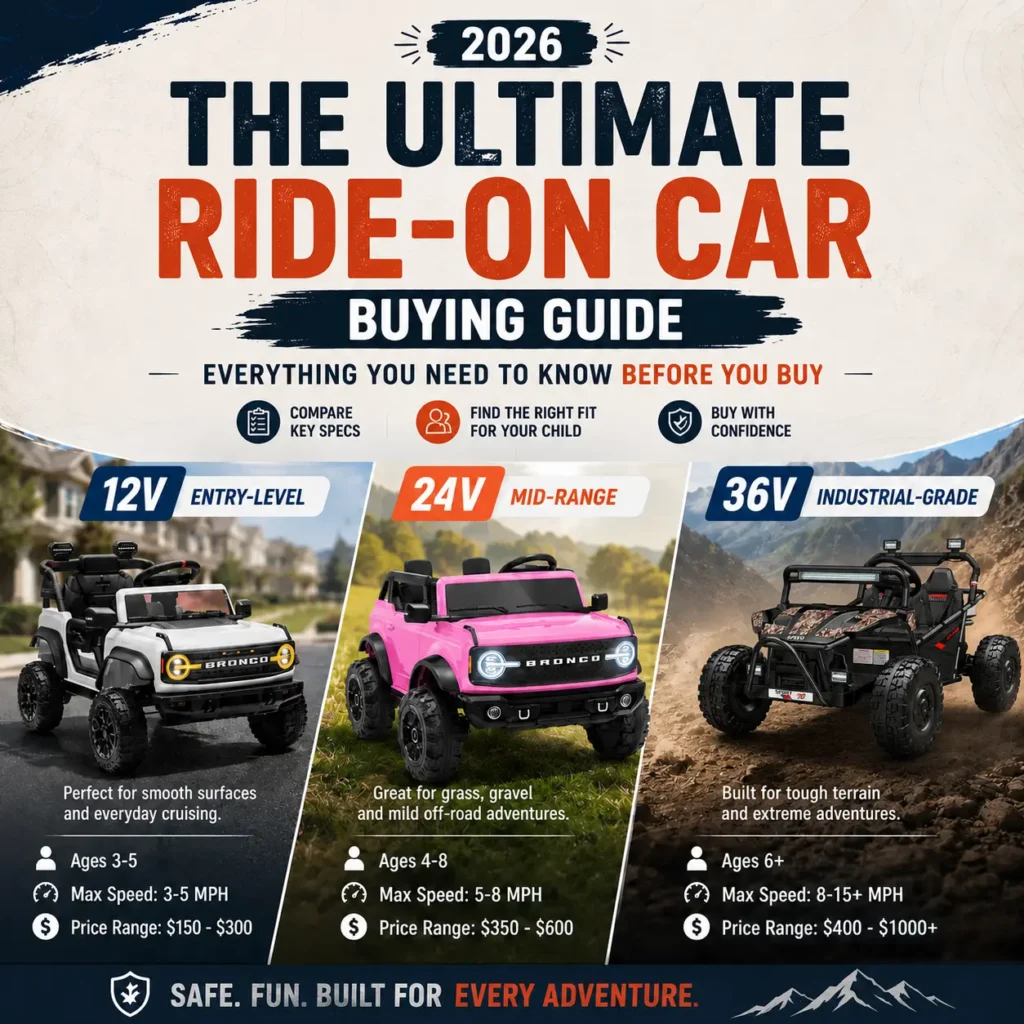
The practical difference between a 24V ride-on toy and a 36V kids car is not simply top speed. It is how confidently the vehicle handles your child’s weight, a second rider, and the terrain around your home. A 24V model can handle everyday play on pavement, short grass, and light gravel, while a 36V model is a better fit for regular two-child riding and more demanding surfaces such as grass, gravel, dirt, uneven ground, and mild slopes.
| What Parents Should Compare | 24V Kids’ Ride-On | 36V Kids’ Ride-On |
|---|---|---|
| Typical recommended age | Usually designed for children ages 3–8. Some licensed or specialty models may have different age guidance, so always check the product page. | Typically designed for children ages 6 and up, especially older children who are within the stated height and weight limit. |
| Typical rider capacity | Commonly around 110–140 lb maximum capacity, depending on the model. | Many 36V two-seat UTV models are rated around 130–132 lb; some premium lithium models may offer higher capacity. |
| Everyday riding surfaces | Driveways, sidewalks, patios, packed dirt, short grass, light grass, and relatively flat gravel paths. | Driveways and pavement, plus grass, gravel, dirt, uneven ground, and mild slopes. |
| Grass, gravel, and mud | Can handle short grass and light gravel when the surface is relatively flat and the vehicle is not heavily loaded. It may slow down in thick grass, loose gravel, or wet ground. | Better suited to grass, gravel, dirt, uneven ground, and light muddy terrain. Performance still depends on tire type, rider weight, and the specific model. |
| Typical motor setup | Commonly uses dual or quad motors. Market examples range from about 130W on a basic two-seat muscle car to 400W, 800W, or more on higher-output trucks and UTVs. | Family-oriented 36V UTVs commonly use dual 200W–250W motors, or about 400W–500W total. Higher-speed 36V go-karts and quads may use 350W–500W brushless motors. |
| Typical speed | Often around 3–5 mph for standard family ride-ons; some 24V models reach about 5–7 mph. Specialty high-performance models can be much faster. | Typical 36V two-seat UTVs are commonly around 5–8.5 mph. High-speed 36V go-karts and quads can reach 15–16 mph, but they are a different product category from a family UTV. |
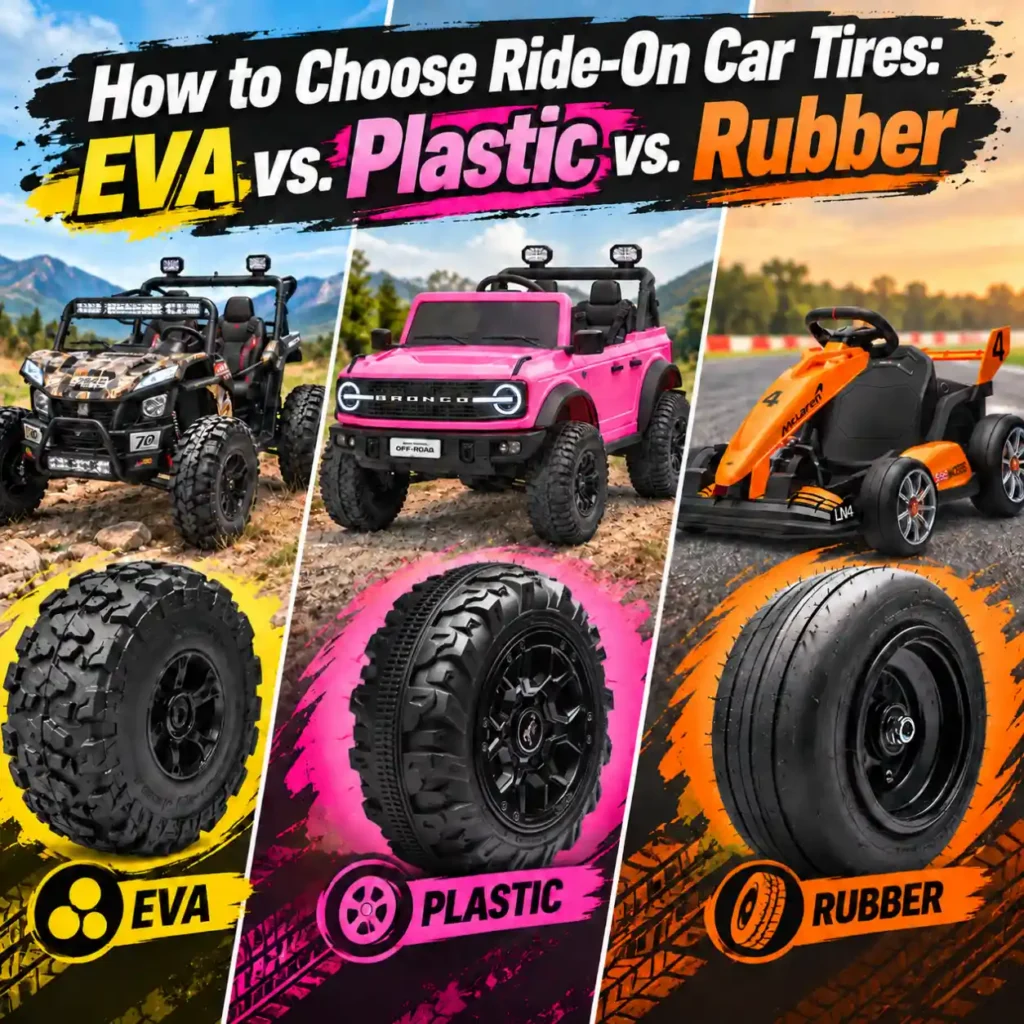
| Tires and suspension | Often includes plastic or EVA tires, with basic suspension or no suspension depending on the model. Better models may add larger EVA tires and improved traction. | More likely to use larger EVA tires or pneumatic rubber tires, metal-frame construction, rear spring suspension, or more robust suspension for uneven surfaces. |
| Battery configuration | Commonly 24V 5Ah, 7Ah, 9Ah, or 14Ah, depending on vehicle size and intended use. | Family 36V UTV models commonly use 36V 9Ah batteries; premium models may use 36V 12Ah lithium batteries for greater energy capacity. |
| Safety features to prioritize | Parent remote, emergency stop, soft start, adjustable speed settings, and a secure seat belt or 3-point safety harness. | A 3-point safety harness, soft-start acceleration, reinforced frame, parent remote and emergency stop where included, speed settings, and terrain-appropriate tires are especially important. |
| Typical price range | Commonly about $229–$730 in the surveyed market, while many mainstream two-seat 24V models fall around $350–$600. | Family-focused 36V UTVs in the research were approximately $469–$599. High-speed 36V go-karts and quads were commonly around $500–$650. |
| Best buying decision | Choose 24V if your child is generally ages 3–8, rides mainly on flat or lightly uneven outdoor surfaces, and does not need frequent heavy two-child use. | Choose 36V if your child is generally age 6+, two children will ride together regularly, or you need more confident performance on grass, gravel, dirt, uneven ground, and mild slopes. |
This is the biggest practical upgrade.
1. Better Performance on Grass and Slopes
A 24V ride-on may work well on a flat lawn, but thick grass, loose gravel, or a mild incline can make it slow down or struggle. That is especially true when the child is near the vehicle’s weight limit or when two children are riding together.
A 36V system gives the ride-on more power reserve. Instead of losing momentum as soon as the terrain gets harder, it can better maintain its pull and forward movement.
For families with a large backyard, a rural property, gravel paths, or uneven outdoor space, this difference matters much more than a small difference in top speed.
2. Stronger Support for Bigger Kids and Two Riders
A kids ride-on car that feels powerful with one small child may feel completely different with two children in the seat.
More rider weight means the motors have to work harder. A 36V system is generally a better match for:
- Older children
- Taller or heavier children
- Siblings riding together
- A two-seat UTV setup
- Longer outdoor play on uneven ground
That is why a 36V 2-seater UTV for big kids and siblings makes sense for families who do not want the vehicle to feel underpowered as their children grow.
3. More Consistent Off-Road Capability
The value of 36V is not only that the vehicle can go faster. It is that the vehicle can keep performing when the surface is less than perfect.
A stronger 36V setup is commonly paired with features designed for off-road riding, such as:
- Larger EVA tires or pneumatic rubber tires
- Dual high-torque motors
- Reinforced frames
- More robust gearboxes
- Improved suspension
- Soft-start acceleration
- Higher-capacity battery systems
These parts work together. The battery provides the power, the motors create movement, the gearbox turns that movement into usable pulling force, and the tires help the ride-on keep traction.
That is why parents should not shop by voltage alone. A well-built 36V model should also have the tires, motors, suspension, and safety equipment to match its higher-performance purpose.
24V vs 36V: Which One Is Right for Your Family?
The best choice depends on your child, your riding area, and how you expect the ride-on to be used.
Choose a 24V Ride-On If:
A 24V ride-on car is usually the better fit if:
- Your child is roughly ages 3–8
- You have a driveway, sidewalk, patio, or flat backyard
- Your lawn is short and relatively smooth
- You want a capable upgrade from a basic 12V ride-on
- You do not need frequent off-road or two-child use
A 24V model is a good middle ground. It offers more performance than many entry-level ride-ons without being more vehicle than your child or yard needs.
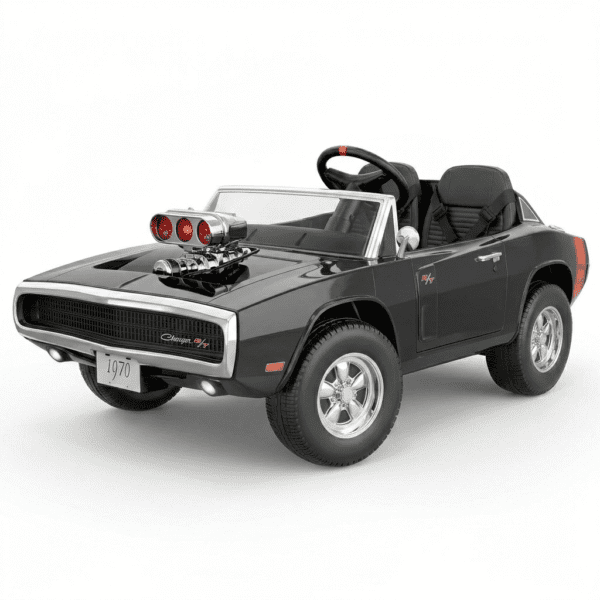


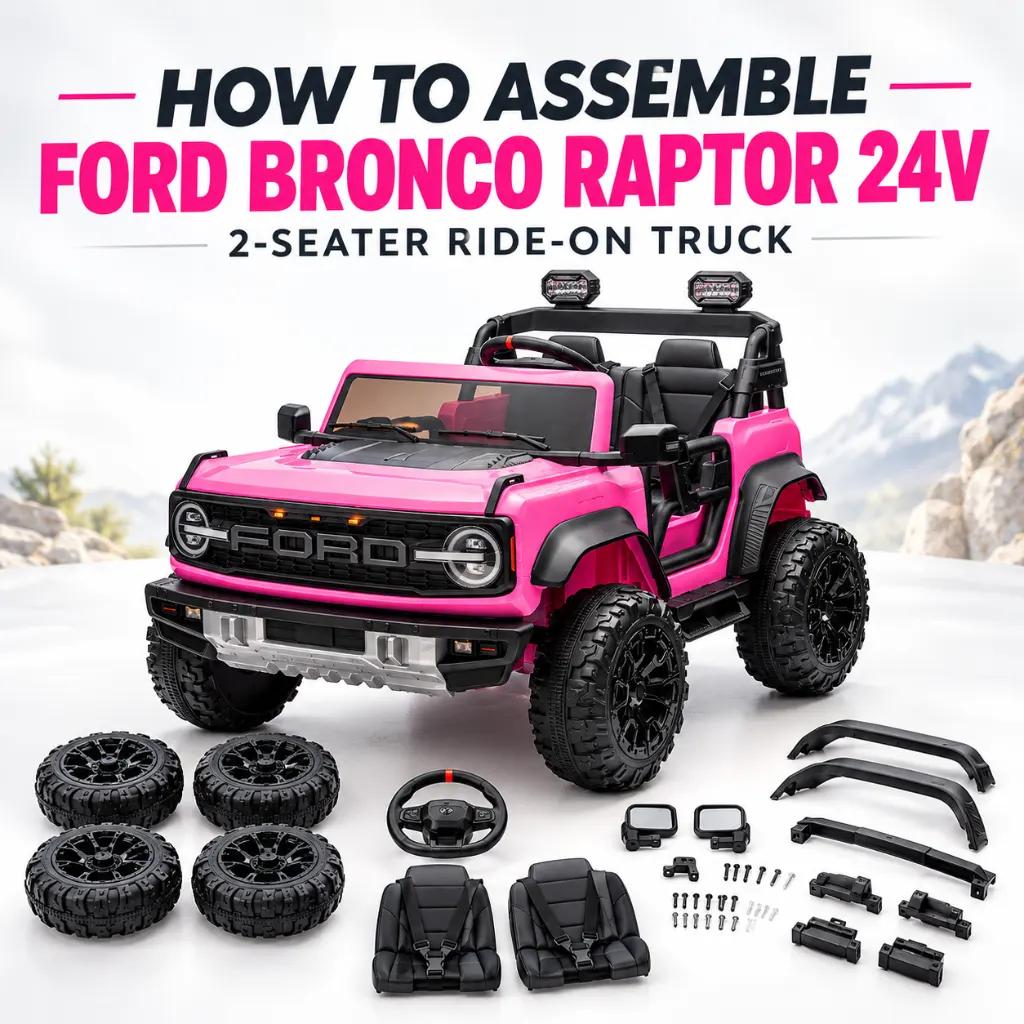
First Ride On Ford Bronco Base 24V 2-Seater Electric Ride-On Truck
$329.97 – $350.99

Choose a 36V Ride-On If:
A 36V ride-on car is the better choice if:
- Your child is 6 years older, taller, or heavier
- Two children will ride together often
- Your property includes grass, gravel, dirt, or uneven ground
- You have mild slopes or a larger backyard
- You want stronger performance as your child grows
- You are specifically shopping for a UTV or off-road buggy style
- You want a ride-on that is less likely to bog down under a heavier load
A 36V model is especially useful when “two seats” are more than a visual feature. If siblings will actually ride together, extra power helps the vehicle deliver a more confident experience.


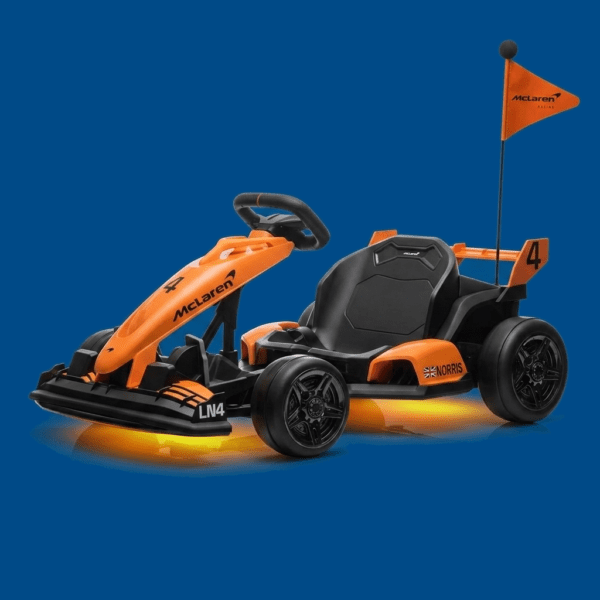

First Ride On McLaren 36V Electric Drift Go-Kart
Original price was: $459.99.$429.99Current price is: $429.99.Is 36V Faster Than 24V?
Usually, a 36V ride-on has the potential to be faster, but speed is not the whole story.
Many 24V models reach approximately 7–14 mph, while many 36V models reach more than 9 mph. Actual speed varies by motor output, gear ratio, wheel size, rider weight, terrain, battery condition, and speed settings.
The more important difference is what happens after the vehicle starts moving.
A 24V ride-on may reach a good speed on pavement but slow significantly in thick grass or on a slope. A 36V ride-on is more likely to hold its speed and keep moving when the ride gets more demanding.
So, 36V is not simply “faster.” It is stronger where it counts.
Is a 36V Ride-On Safe?
A higher voltage does not automatically make a ride-on unsafe. Safety depends on the full vehicle design, the child’s age and ability, the riding environment, and adult supervision.
For a heavier-duty ride-on, look for safety features that match the vehicle’s performance:
- A safety harness instead of a basic lap belt
- Adjustable speed settings
- A arent remote
- Emergency-stop or power-cut control
- Soft-start acceleration
- A reinforced frame
- Stable tires designed for the intended terrain
- Clear age, weight-capacity, and surface-use guidance
A 2-seater ride-on with a parent remote gives parents an extra layer of control, especially while a child is learning to steer, judge distance, and manage speed.
Parents should still supervise outdoor riding, keep children away from roads, pools, steep hills, and traffic, and use a helmet for faster riding or rougher terrain.
Why a safe Harness Matters More on 36V Models
As ride-ons become larger and more capable, the seat belt becomes more important.
Some heavy-duty ride-ons use only a basic lap belt. For a bigger child or a two-seat vehicle used on uneven ground, a proper multi-point safety harness is a much better sign of thoughtful product design.
A 3-point or 5-point harness helps secure both the lap and upper body. When combined with soft-start acceleration, speed control, and a parent remote, it helps create a more controlled ride for children using a larger off-road vehicle.
For parents comparing 36V models, the safety harness should be one of the first features to check—not an afterthought.
Our 36V Option for Bigger Kids and Siblings
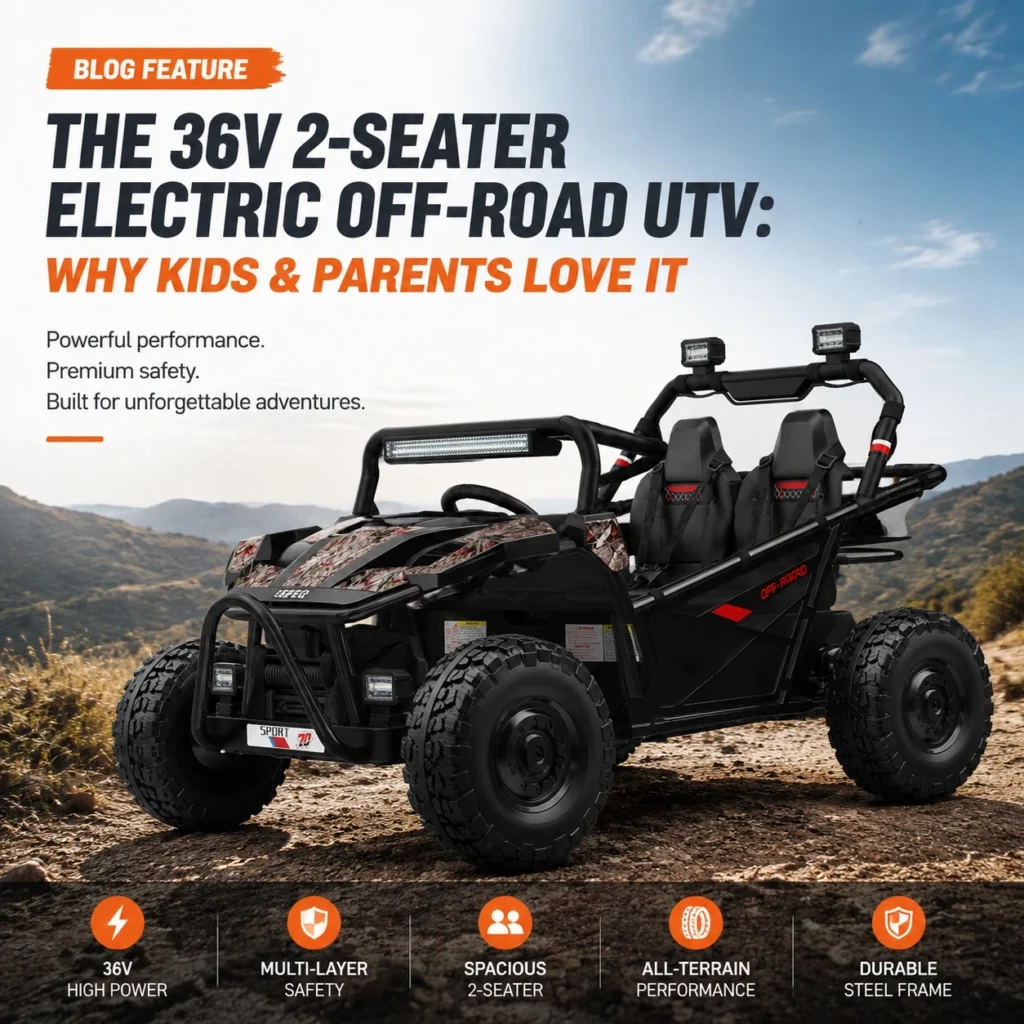
The First Ride On 36V 2-Seater Electric Off-Road UTV is built for families who need more than a basic driveway ride-on.
This kids electric off road car is designed for older children, siblings, and more demanding outdoor play. As a 36V 2-seater UTV for big kids and siblings, it gives families the space, power, and off-road-focused features needed for shared rides across grass, gravel, uneven yards, and mild slopes.
Key features include:
- 36V power for stronger performance under load
- Dual high-torque motors
- EVA tires for improved traction and comfort
- A 3-point safety harness
- A soft-start pedal for smoother acceleration
- Parent remote control for added supervision
- Two seats for siblings or friends
- An off-road UTV design made for real backyard adventures
If your child has outgrown a basic ride-on—or if one child is always asking to bring a sibling along—a 36V UTV can be a more practical long-term choice.
FAQs about 24V VS 36V Ride-Ons
What is the biggest difference between a 24V and 36V ride-on car?
The biggest difference is power under load. A 36V ride-on is generally better at carrying larger riders, handling two children, driving through grass or gravel, and climbing mild slopes without slowing down as much.
Is 36V always better than 24V?
No. A 36V ride-on is better for demanding terrain, heavier riders, and two-seat use. But for a younger child riding mainly on a driveway or flat backyard, a 24V ride-on may be the more appropriate and cost-effective choice.
Can a 24V ride-on go on grass?
Yes, a 24V ride-on can usually handle short, flat grass. However, thick grass, uneven lawns, gravel, and slopes can make it lose speed or struggle, especially with a heavier rider or two children in the vehicle.
Is a 36V ride-on car too fast for a child?
Not necessarily. Top speed depends on the model, and many 36V ride-ons include adjustable speed settings and a parent remote. Parents should start children at the lowest appropriate speed and supervise outdoor riding.
Why does a two-seat ride-on need more power?
Two children add more weight, which increases the load on the motors and battery. A stronger 36V system helps the vehicle keep moving more consistently, especially on grass, gravel, or slopes.
What safety features should I look for in a 36V ride-on?
Look for a 3-point safety harness, soft-start acceleration, adjustable speed settings, a parent remote, emergency-stop capability, durable tires, and clear weight and age recommendations.
Final Summary
For most everyday riding, a 24V ride-on kids toy is a solid choice for younger children and relatively flat outdoor spaces.
A 36V ride-on car is the upgrade for families who need more than basic play performance. It is better suited to bigger children, two-seat riding, grass, gravel, mild slopes, and more adventurous backyard driving.
The best question is not, “Which voltage is higher?”
It is: “What does my child need the ride-on to do?”
If the answer includes bigger riders, siblings, tougher terrain, and longer-term use, a 36V off-road UTV is likely the better fit.