Blog
Ride-On Cars Age Guide: Which Kids’ Electric Ride-On Car Fits Your Child?
A ride-on that matches where your child is right now gets used every day, and your child gets the full fun of it.
On this page
Key TakeawaysWhat Ages Are Ride-Ons For?Which Ride-On Cars Fit Each Age Group?How To Choose a Ride-On That Lasts LongerWhat Else Should You Check When Choosing by Age?FAQs About Ride-On Cars AgesKids of different ages are very different riders. Their control and coordination, what they love, and their height and weight all change fast, so no single ride-on car fits every age.
Choosing by your child's stage matters. A ride-on that matches where your child is right now gets used every day, and your child gets the full fun of it. A few design details can also help a ride-on stay useful for longer.
This guide shows how to choose a kids' electric ride-on car by age, and how to pick one that grows with your child.
Key Takeaways
- Young children can begin with an age-appropriate wagon, push car, or foot-to-floor ride.
- Around age 3, many are ready to learn to steer and use a pedal in an electric car.
- For many children ages 3–8, a 12V or 24V car offers a first driving experience. Older kids may prefer a roomier UTV or go-kart.
What Ages Are Ride-Ons For?
Children can begin with an age-appropriate push car or wagon during the toddler years. As they grow, they can move to electric cars and, later, larger youth vehicles. The right starting age depends on the individual ride-on and your child’s ability to use it.
Throughout a child's growing years, a ride-on gets kids outdoors and away from screens, gives them a sense of control, and fuels pretend play, from “road trips” to racing. Steering around obstacles builds spatial awareness and hand-eye coordination. Parents also get a toy that the whole family can enjoy together.
Which Ride-On Cars Fit Each Age Group?
A 3-year-old and a 10-year-old want very different things from a ride-on. Here is what each age group can usually handle, what they love to drive, and the voltage, speed and controls that suit them best.
Ages 0–3: Wagon, Foot-to-Floor, and Push Car Rides
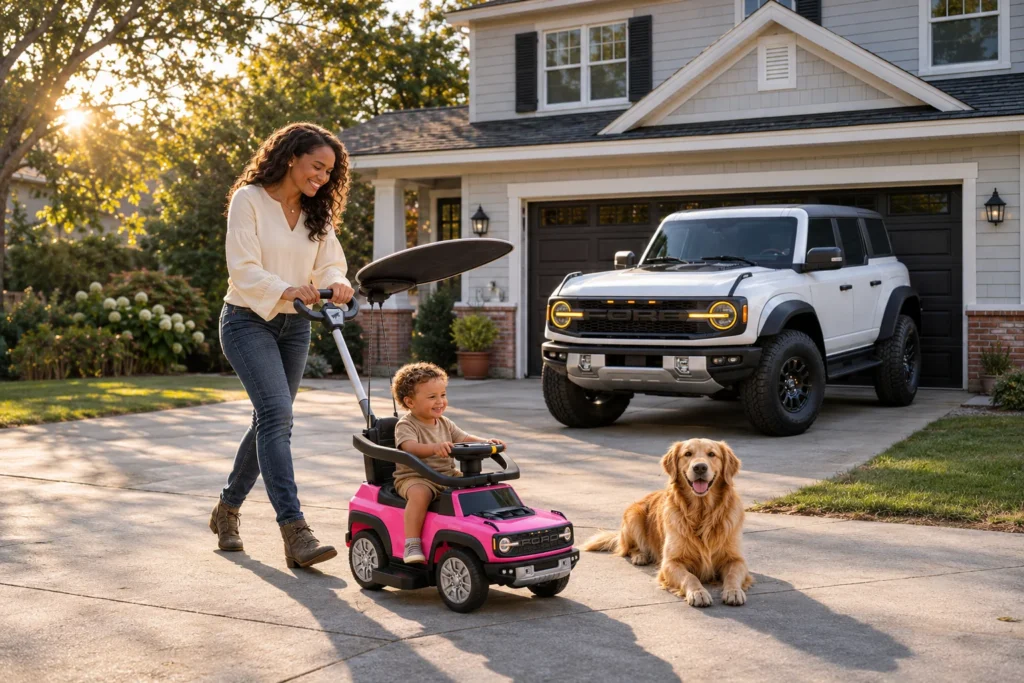
Toddlers aren't ready to drive yet, but they love riding along, pushing with their feet and copying what grown-ups do, from “driving” the car to heading out on a trip. Parents, for their part, want something that helps them take a little one out and about. Three kinds of ride fit this stage:
- Wagon: Built for outings. You do the pulling while your child rides along, so it's the easy way to bring a little one with you.
- Foot-to-floor ride: Your child sits in the seat, steers and pushes along with their feet. With no battery or pedal to learn, it's a simple first step toward driving.
- Push car: A car-shaped ride that you push with a handle. Your child sits behind the wheel and plays driver while you stay in control.
Ages 3–8: First Solo Drive in a 12V or 24V Car

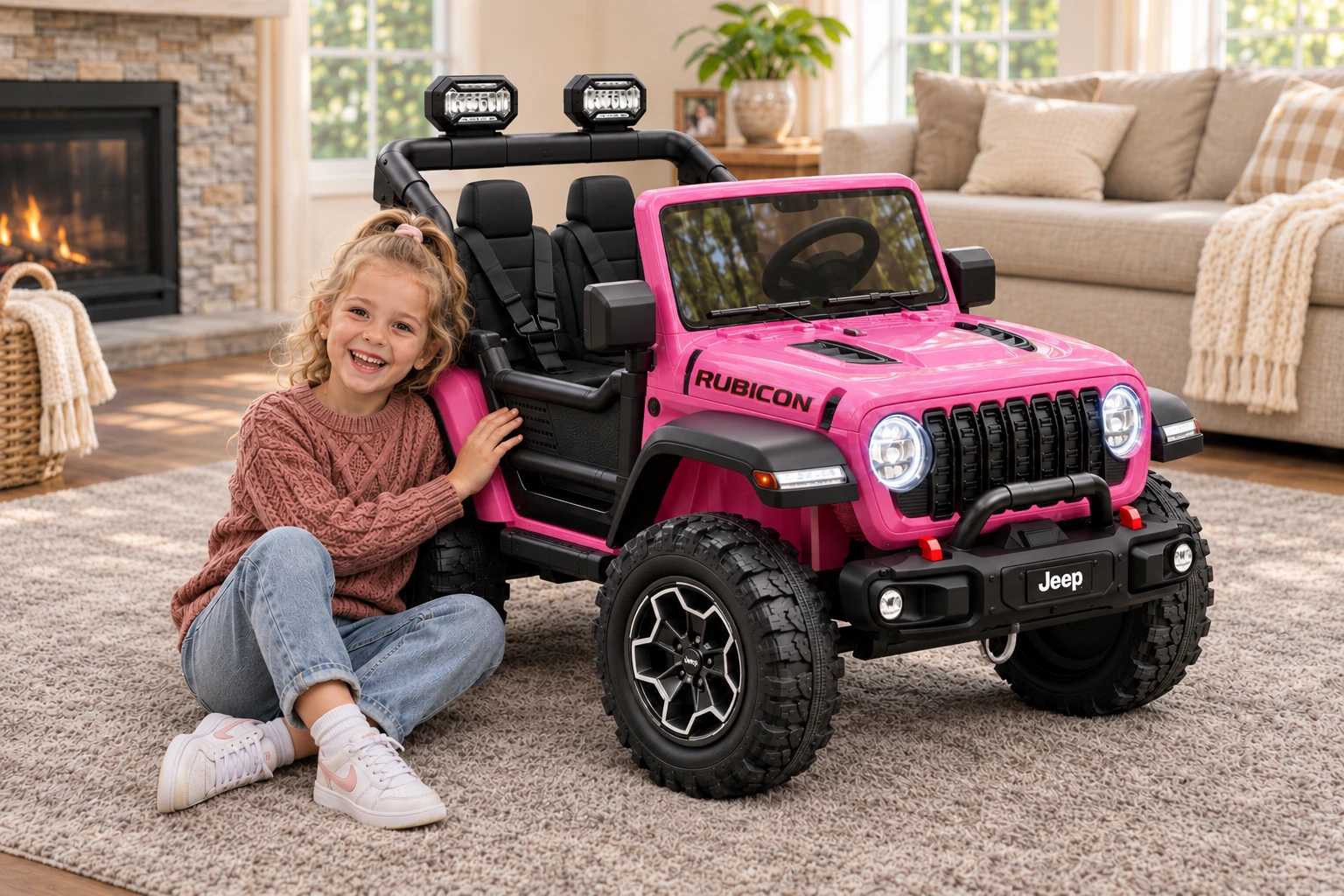
Around age 3, many children are ready to move from a push car to their first electric ride-on.Their driving becomes steadier with practice. As they grow, they may also want more room, a different style of car, or a seat for a sibling or friend.
Both 12V and 24V ride-on cars offer plenty of choices at this age:
- A 12V model is often a one-seater with a top speed around 2–5 mph.
- Many 24V models are larger two-seaters, yet their top speeds may still be around 4–5 mph.
Once you’ve found cars that fit your child and offer a manageable speed, let their interests help you choose.
They might love a realistic truck, music they can play through a Bluetooth speaker, or a mist effect that makes a car feel like a race car.
For a first electric car, we recommend a manageable low-speed setting and a parental remote. Your child can practice driving while you stay close and help when needed. As their skills improve, they can make more of the driving decisions themselves—without needing a faster car before they are ready for one.
Ages 8–12: More Independence and Adventure
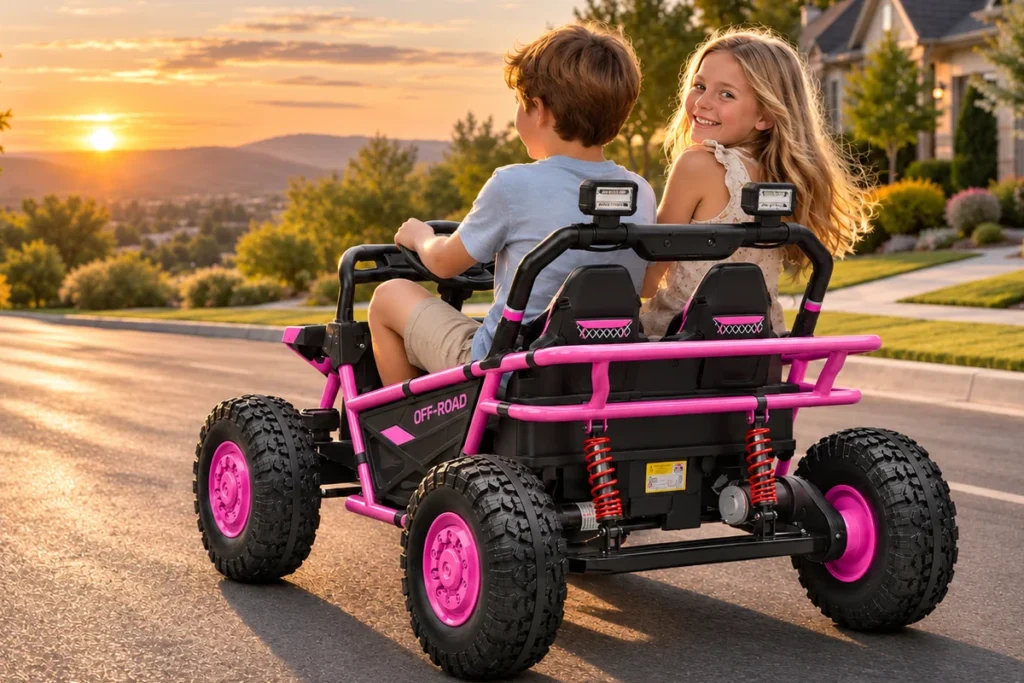
At ages 8–12, kids may want a bigger role in their outdoor play: choosing a route, learning to handle turns, and riding alongside friends or family. That calls for a vehicle that fits their growing bodies and suits the space where they actually ride.
Match the vehicle to the activity your child enjoys.
- A roomy UTV may appeal to a child who likes exploring the yard
- A go-kart may suit one who enjoys practicing turns in an open, level area.
Many vehicles built for these activities use 24V, 36V, or 48V systems, along with tires and other components designed for their intended terrain. Some models reach around 8–9 mph.
Compare each vehicle’s listed speed, tires, brakes, rider limits, and recommended surfaces to find one that matches your child’s experience and your riding space.
Ages 12+: Choosing a Bigger Challenge
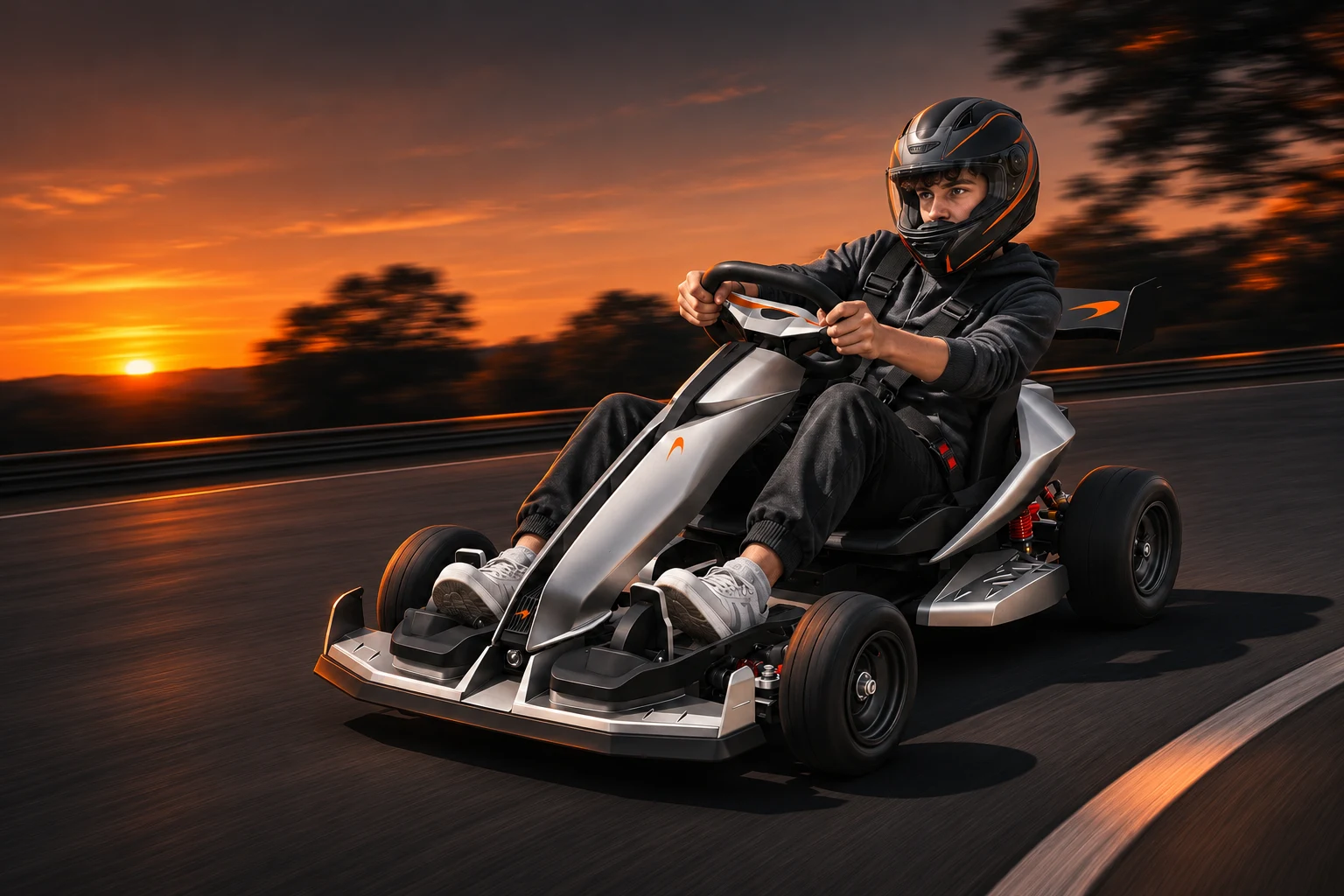
For teens who enjoy learning a new skill, driving can become more than a trip around the yard. They may want to practice smoother turns, control a drift, and see how their technique improves over time. Their interests can help you choose between a buggy, go-kart, ATV, or electric dirt bike.
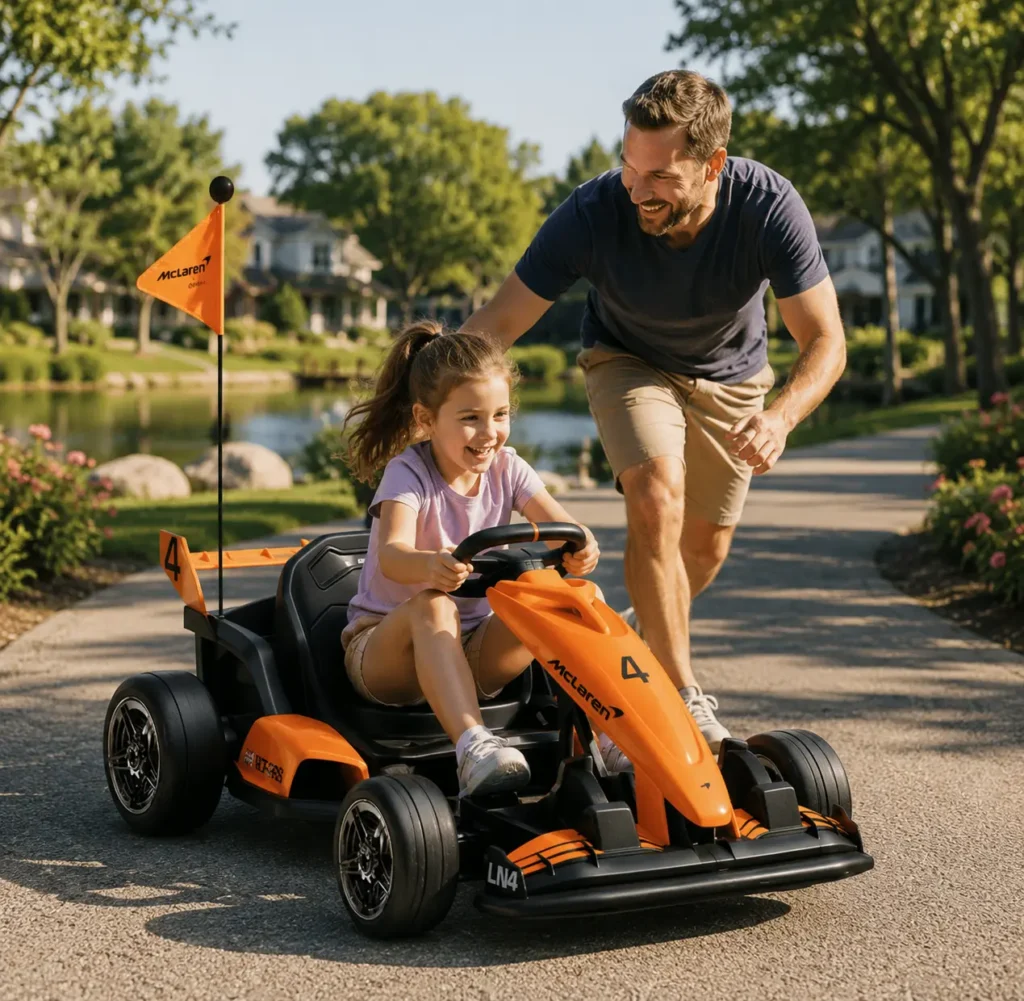
The First Ride On McLaren 48V High-Performance Drift Go-Kart is one example for riders 14 and up. It has three forward speed settings—about 5, 10, and 15 mph—plus a handbrake for drift control and a four-position adjustable seat. It’s a good fit for teens who have already learned the basics of steering and braking and want to practice more precise turns and controlled drifts.
How To Choose a Ride-On That Lasts Longer
Many parents hope to buy one ride-on that lasts from age 2 to age 10. That is unrealistic. Toddlers need a smaller ride, ideally with a remote. By ages 8-10, many kids lose interest in a 5 mph ride and want something faster, a drift kart or an electric off-road bike.
Still, a few choices can stretch a ride-on's useful life:
- Pick a model with parental control or speed settings. Use the parental control to guide your child at the start, then raise the speed as their driving improves. Parents can buy a 12V ride with a 2.4GHz parental remote for a 1- to 2-year-old, drive it for them at first, and let them drive solo at age 3, with no second purchase needed right away.
- Look for an adjustable body. A ride-on whose frame can be extended lets you adjust it to your child's height as they grow.
- Choose a style your child loves. Some kids want something cool and different, some want a ride that looks like one from a favorite show, and some want a car like Dad's. A ride they love is a ride they keep using.
- Choose a well-built model. Check the weight limit, seat and frame construction, wheel attachment, and battery specifications, not just the car’s appearance.
What Else Should You Check When Choosing by Age?
Size and Weight Capacity
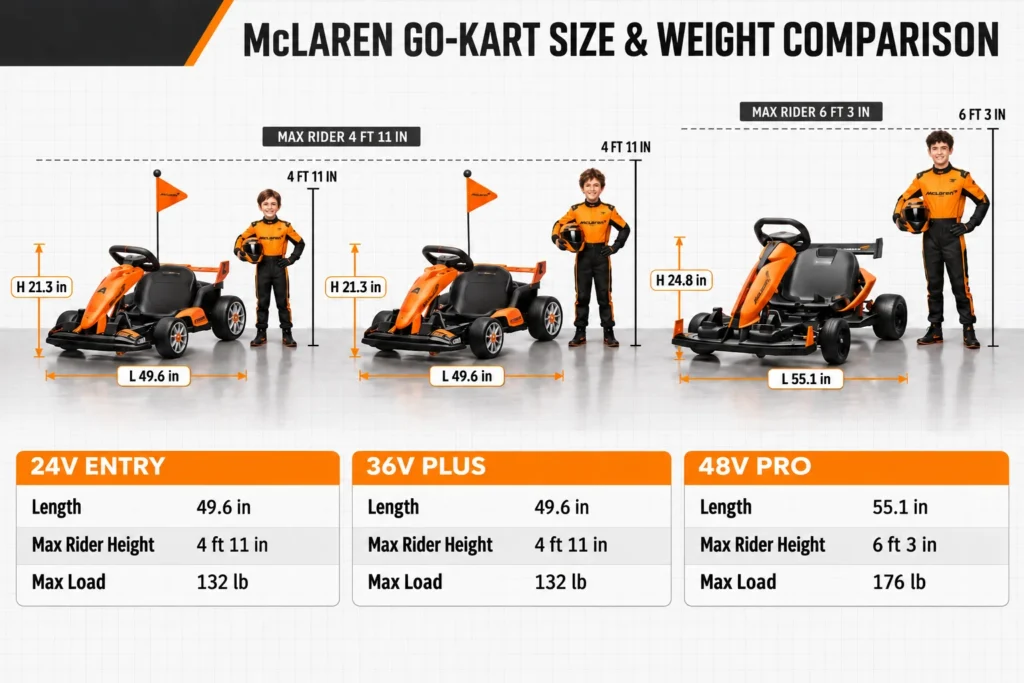
Parents often point out that height and weight matter more than the age on the box. A tall child can outgrow a ride-on early, while a smaller child may not be able to reach the pedal.
At First Ride On, we provide detailed size and weight information for each model, so you can compare your options and choose a ride-on that fits your child with confidence.
Vehicle Type
Pick the type of ride that fits the places you will use it. Standard rides and car-style rides suit younger kids, UTVs and off-road styles suit older kids, and the surface matters too: grass and gravel need more traction and power than smooth pavement. Most ride-ons are made for outdoor use on level ground, so keep them away from roads, slopes, and areas near pools or other water.
Safety Features
Safety features and safety habits work together. Look for these features, and build these habits from the first ride:
- Seat belt
- Parental remote: Lets you steer, stop or shut off the car for young riders.
- Soft start and speed settings: Keep the car from jolting forward and let you cap the speed while your child learns.
- Supervision and safe zones: Choose a flat, open area away from roads, slopes and water, and keep an adult nearby.
- Safety standards: Look for ASTM F963 toy-safety compliance.
FAQs About Ride-On Cars Ages
Can I Choose a Kids’ Ride-On Car Based on Battery Voltage Alone?
No. Voltage does not define an age group or tell you exactly how fast a car will go. A 24V two-seater may have a similar top speed to a 12V one-seater. Compare each model’s recommended age, speed settings, seat dimensions, weight limit, controls, and suitable riding surfaces.
What Is the Minimum and Maximum Age for Electric Ride-On Cars?
There is no single age range for every ride-on. Children around 12–18 months can enjoy age-appropriate push rides, while electric cars and larger youth vehicles serve different stages through the teen years. If you specifically want a motorized car, check the minimum age on that model’s product page rather than using the starting age for push rides.
How Reliable Are First Ride On’s Age Recommendations?
First Ride On’s age categories are a useful way to narrow your search. To choose between models, compare the parental controls, seat dimensions, weight limit, speed, and other specifications on each product page with your child’s size and abilities. If you are unsure about fit or a feature, ask our online support team before ordering.
The next adventure
starts with the right ride.
Put your shortlist into motion. Explore ride-ons and compare the details that matter to your family.
Find Their Ride